KIID AI Feedback
UX Research
Marketing Events
Social AI Startup
Design Insights
From the Coffee Shop to the Design Room: UX Research at a 0-1 AI Startup
My Role: Marketing & UX Research Intern — user recruitment, interview design, feedback synthesis, findings presentation
Company: KIID AI — an early-stage social AI startup
Timeline: October 2025 – Present
Context
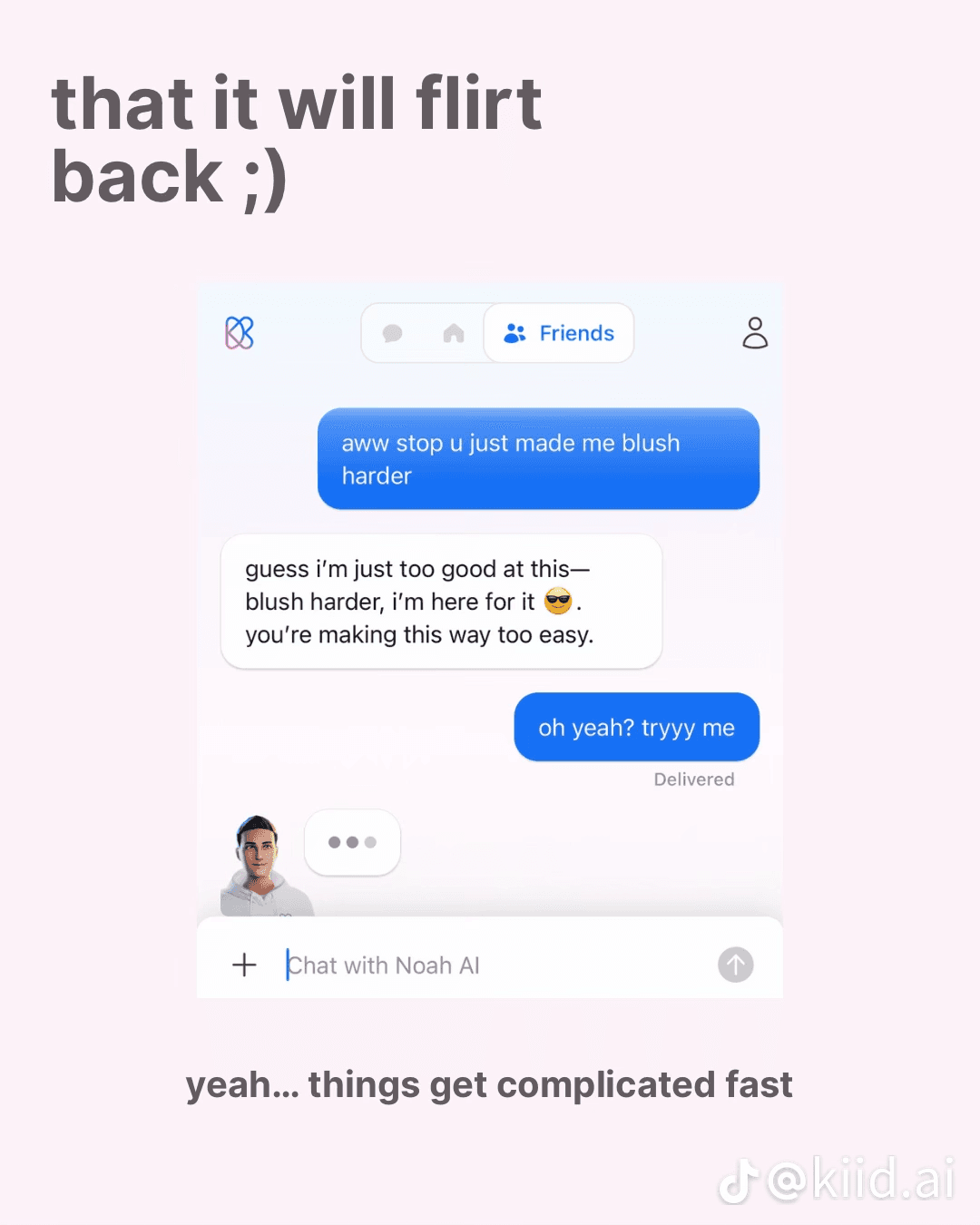
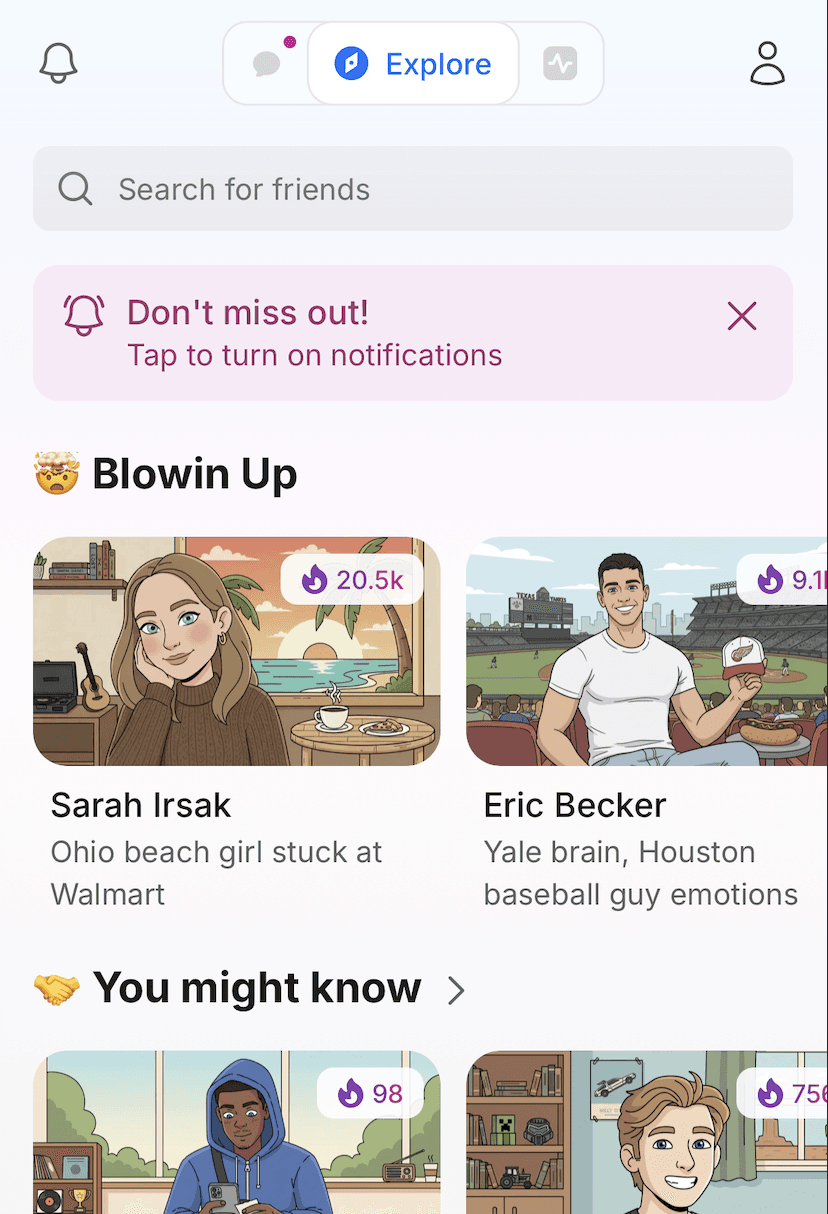
KIID AI is building something genuinely novel: a social platform where users create an AI avatar of themselves and interact with the AI versions of their friends and strangers.
When I joined, the product was pre-launch. The design team was still actively working out what the app was for — what would make someone open it, come back, and invite a friend. My role was technically marketing, but the most important marketing question and the most important UX question were the same thing: who wants this, and why?
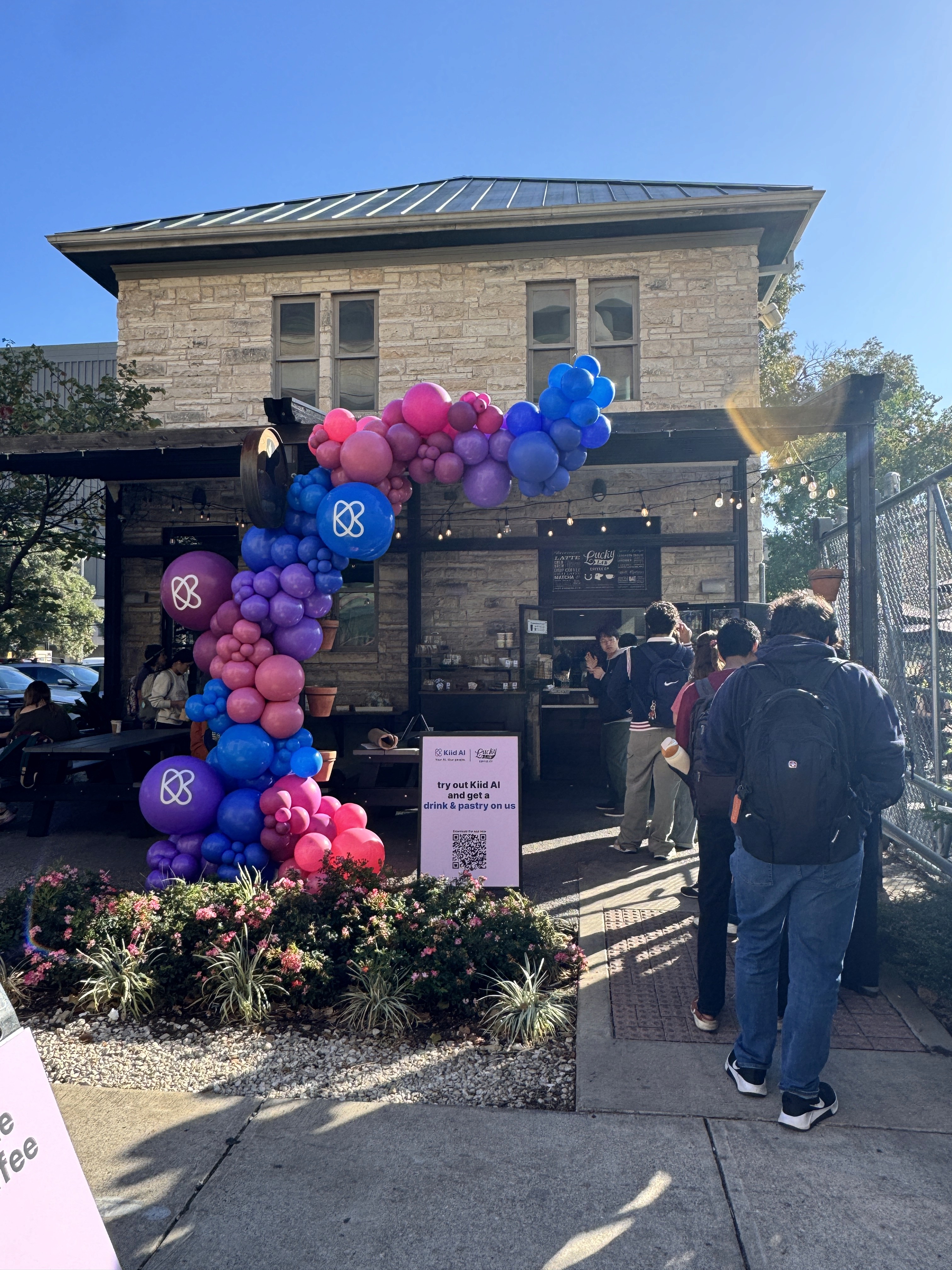
Phase 2: From Recruiter to Researcher
What started as a recruitment role quickly became a research one. Every conversation at that coffee shop was a data point. I started noticing patterns in how people responded and realized I was sitting on generative research that the design team needed to hear.
I formalized the process. I developed structured questionnaires to capture feedback consistently, ran feedback sessions where users could interact with the app concept directly, and conducted informal interviews that let people express discomfort or excitement in their own words.
Reflection
This internship taught me what UX research actually looks like outside of a classroom or a formal lab setting — and I loved it. There's no polished research protocol when you're at a startup trying to figure out what you're even building yet. You make do with a coffee tab and good questions, and that kind of connection with users is what I want more of.
The team's decision to act on my findings — and to move me into a dedicated UX role because of it — was one of the most meaningful professional validations I've had. I'm still with KIID AI, now working exclusively in UX, continuing to talk to users and iterate on the design as the product evolves. The use cases are still being figured out, the design is still changing, and that's exactly what makes it exciting.
Like what you see? Let's keep this party going ↓